Kilimanjaro packing list: what to bring and what to hire
Find a tour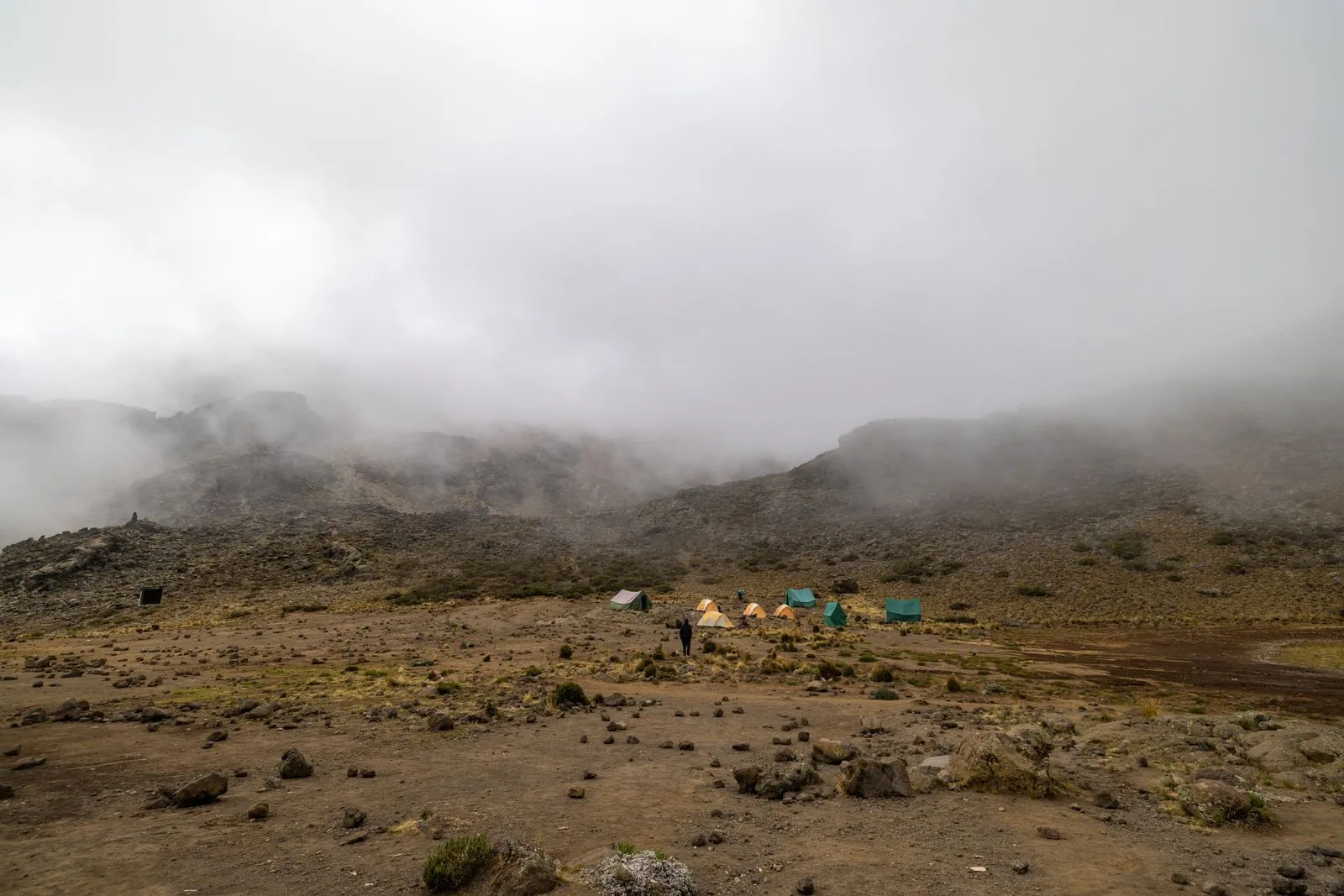
Do you need climbing gear for Kilimanjaro?
No. Reaching the summit doesn’t need technical mountaineering skills3, so your kit is walking gear and cold-weather clothing. Acclimatisation matters more than hiking skill, and it works best on a 7–8-day3 route, so pick your route first with the climbing guide and pack for its nights.
You won’t be heading up alone either: you must climb with a licensed guide1. If you’re still working out how you can climb Kilimanjaro, start there before you shop.
Clothes for climbing Kilimanjaro: from heat to hard frost
On Mount Kilimanjaro you dress in layers, because the mountain makes its own weather, so be ready for wet days and cold nights whenever you climb1. This is the range your clothes have to handle:
| Where and when | Temperature |
|---|---|
| At the base, start of the climb | 27–32°C1 |
| Sunny days on the mountain | up to 15°C4 |
| Summit area, average | about -7°C5 |
| Uhuru Peak at night | -18°C to -26°C1 |
What that means for your bag:
- Thermal underwear: two sets, one for sleeping and one for hiking4. Sunny days get warm, so keep the thermals for summit night.
- Summit jacket: an insulated jacket rated to a comfort temperature of -15°C4.
- Gloves: fleece gloves with warm mittens over them4 for summit night.
- Socks: skip cotton, because cotton socks hold sweat and cause blisters2.
- Rain layer: the long rains run from the end of March to early June, the short rains from late October to mid-December6. Check rain and temperatures by month for your dates.
Boots, sleeping bag, poles and headlamp
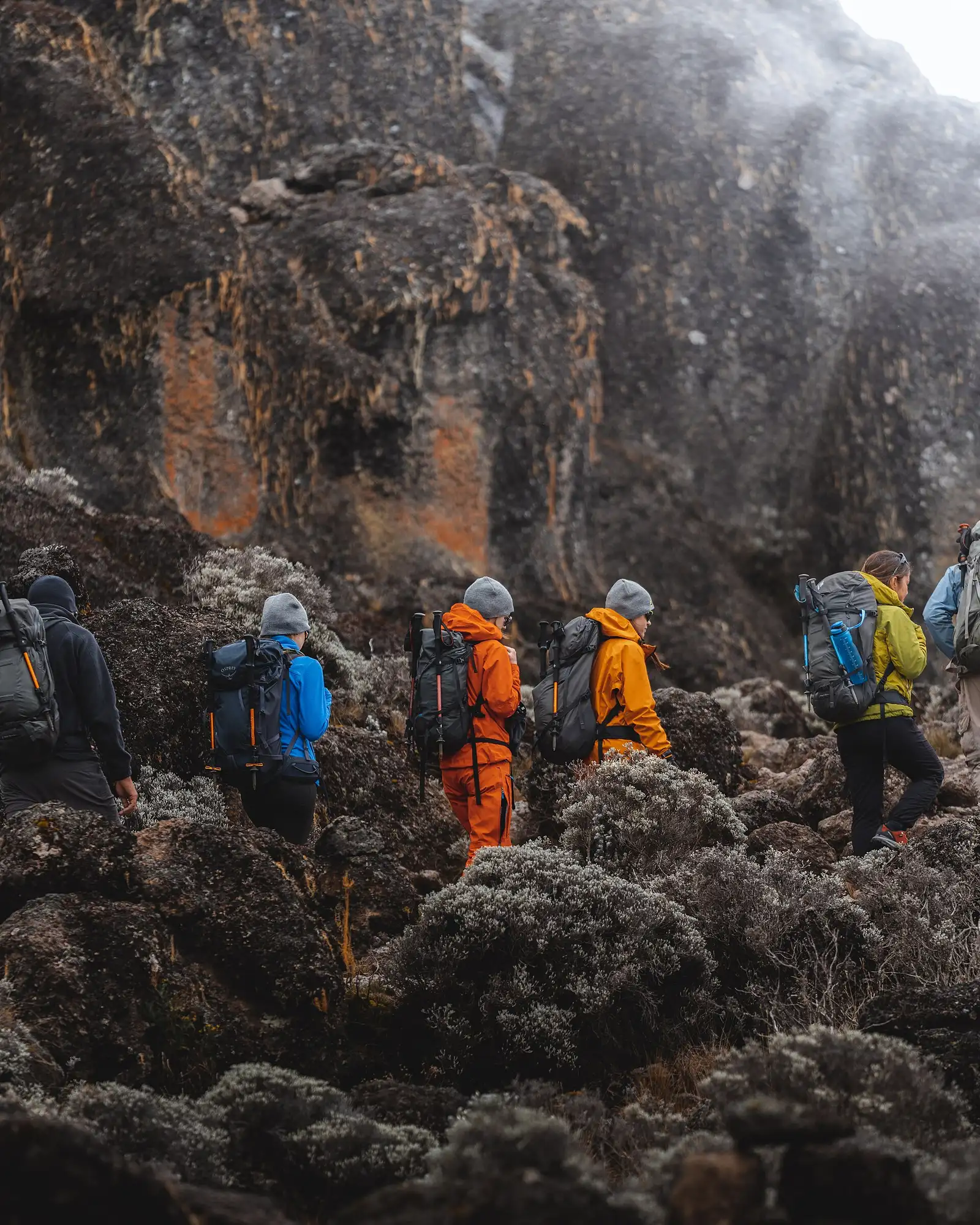
The hardware is short and simple, and every item on it can be hired in Tanzania (prices further down):
- Hiking boots: boots that support your ankle, like the ankle-supporting boots4 rental shops offer.
- Sleeping bag: one warm enough for nights well below freezing near the top.
- Trekking poles: hired by the pair if you don’t own any.
- Headlamp: with spare batteries, and plan to carry the used ones down.
- Portable charger: there’s no electricity on the mountain, so carry portable chargers1 for your phone and headlamp.
Sun and altitude: glasses, sunscreen and Diamox
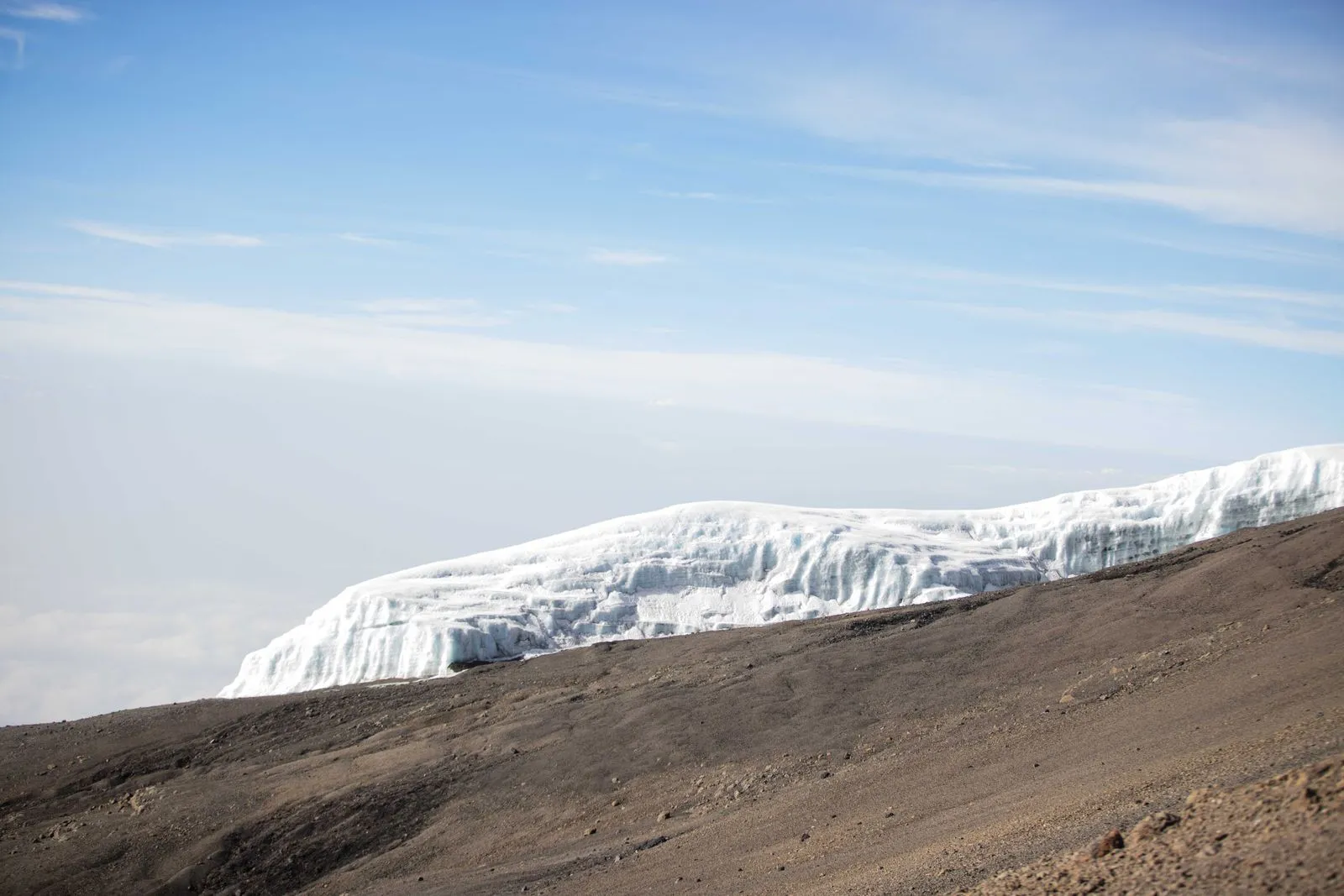
Kilimanjaro National Park lies about 300 km south of the equator7, and UV radiation rises both closer to the equator and at higher elevations8. On top of that, UV at 6,000 m is much higher than at sea level2.
- Sunglasses: the most important step in protecting your eyes from UV8, according to the CDC. UV reflected off snow nearly doubles the UVB reaching your eyes8 and can cause snow blindness, so wear them near the summit even when it’s cloudy2.
- Sunscreen: reapply every 2–4 hours8, and more often when you sweat.
- Diamox (acetazolamide): climbers taking it were much less likely to get acute mountain sickness on 5-day ascents9. Talk to your doctor before you go.
Duffel bag weight and porters
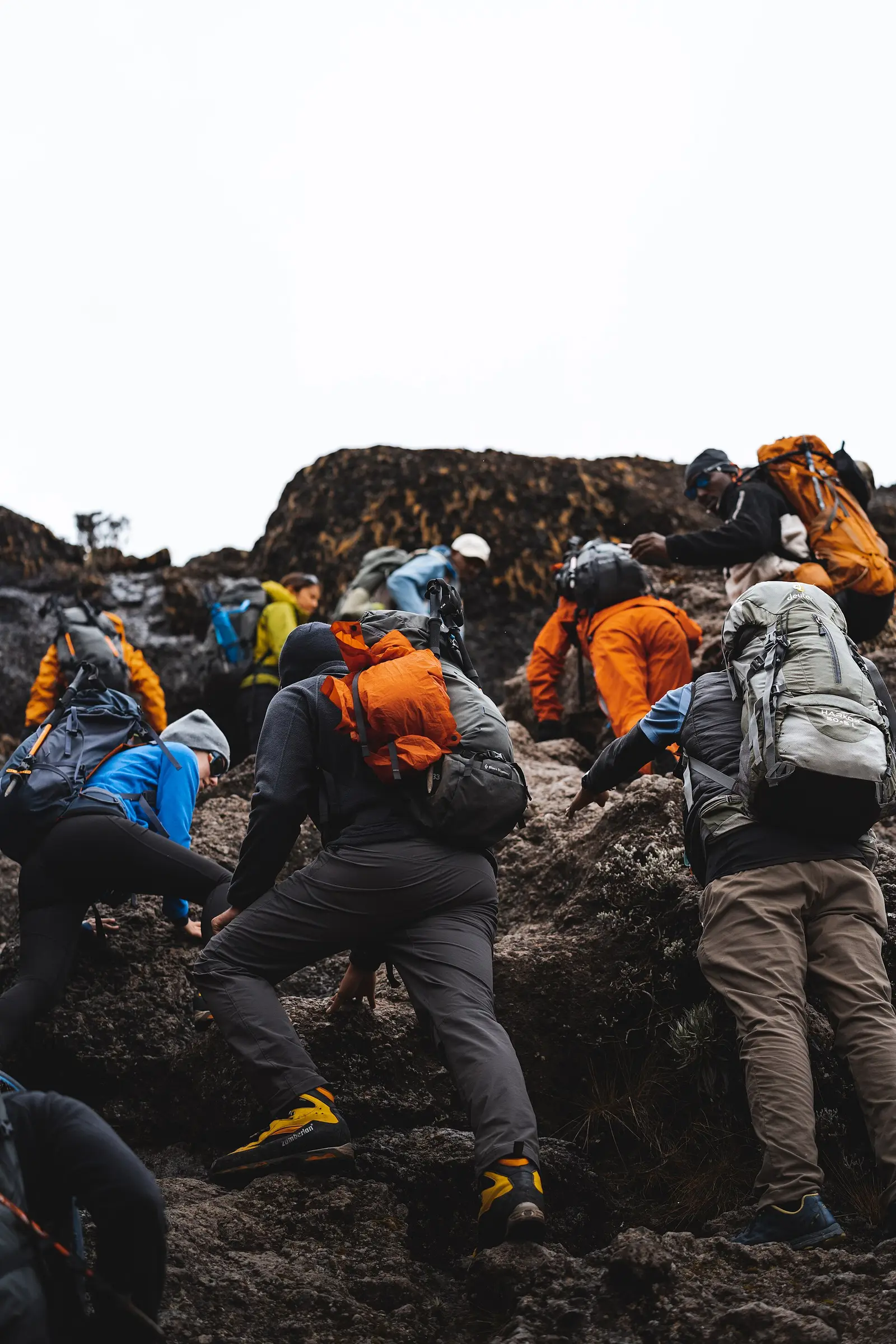
Your porter carries your duffel bag, and park regulations cap it at 15 kg2 fully loaded, according to Altezza Travel. The porter limit at Ultimate Kilimanjaro, its own policy, is also 15 kg10.
Plastic bags and other things to leave at home
Leave plastic carrier bags out of your luggage: they’ve been banned in mainland Tanzania, whatever their thickness, since 1 June 201911.
- On arrival: every entry point has a desk where you hand in plastic carrier bags11, and bags brought in are confiscated at the point of entry12.
- Toiletries: zip-lock bags used only for toiletries are allowed11.
- On the mountain: plastic carrier bags and single-use plastic water bottles aren’t allowed13, according to Tranquil Kilimanjaro, and Ultimate Kilimanjaro says the same about the bottles10. Bring refillable bottles.
- Waste: batteries, gas canisters and medical waste must be carried back to the gate13.
- Alcohol: it’s prohibited inside Kilimanjaro National Park13, according to Tranquil Kilimanjaro.
Hire or buy gear in Moshi and Arusha
You can fill the gaps when you land: you can hire the gear you need on arrival in Tanzania2, and new or second-hand gear can be hired in Moshi or Arusha13. Hiring everything from Altezza Travel costs about US$250–US$3002 (checked November 2026).
Those prices cover the whole expedition, and the company brings your chosen gear to the pre-climb briefing4. Shop around, as the same item can cost less elsewhere:
Gear hire prices for the climb
| Item | What you get | Altezza Travel | Tranquil Kilimanjaro | Price basis | Source |
|---|---|---|---|---|---|
| Hiking boots | Ankle-supporting | US$45 | – | – | Altezza Travel (tour company) |
| Sleeping bag | Comfort rating -12°C | US$45 | US$35 | Per trip | Altezza Travel (tour company); Tranquil Kilimanjaro (tour company) |
| Summit jacket | Comfort rating -15°C | US$40 | – | – | Altezza Travel (tour company) |
| Trekking poles | A pair of poles | US$20 | US$10 | Per trip | Tranquil Kilimanjaro (tour company); Altezza Travel (tour company) |
| Duffel bag | Waterproof, about 100 litres, carried by a porter | US$40 | – | – | Altezza Travel (tour company) |
| Sunglasses | Category 3–4 UV protection | US$30 | – | – | Altezza Travel (tour company) |
| Headlamp | With one set of batteries | US$15 | – | – | Altezza Travel (tour company) |
| Full set of gear | Everything you need for the hike | US$250–US$300 | – | – | Altezza Travel (tour company) |
Altezza Travel (tour company); Tranquil Kilimanjaro (tour company)
Buying in Moshi is harder: the town’s small gear shops mostly carry second-hand or off-brand items, so the advice is to bring your gear rather than hunt for it in Moshi10. For snacks and toiletries, the supermarkets are easy:
| Supermarket | Where | Hours |
|---|---|---|
| Viva Supermarket | Moshi |
24 hours13 |
| Aleems Grocery Supermarket | Boma Road |
9AM–1:30AM15 |
| New MDC Supermarket | Arusha Road |
8AM–9PM15 |
Viva Supermarket also stocks snacks, drinks and trekking essentials13. Still planning your flights? The getting there details cover your arrival.
Travel insurance to sort before you fly
Insurance goes on the list too, and it comes in two parts: the government cover for entry and your own cover for the climb.
Check your high-altitude travel insurance separately, as your trek may not include any: Altezza Travel’s climbing packages don’t include travel insurance17.
Photos: Wikimedia Commons and Pexels. Authors and licences: image credits
Checked against 17 sources · last checked November 2026
- Wikivoyage · checked November 2026
- Altezza Travel (tour company) · checked November 2026
- Altezza Travel (operator) · checked November 2026
- Altezza Travel (operator) · checked November 2026
- Wikipedia · checked November 2026
- Altezza Travel (operator) · checked November 2026
- Wikipedia · checked November 2026
- CDC (official) · checked November 2026
- CDC (official) · checked November 2026
- Ultimate Kilimanjaro (operator) · checked November 2026
- eg.tzembassy.go.tz (official) · checked November 2026
- leap.unep.org · checked November 2026
- Tranquil Kilimanjaro (tour company) · checked November 2026
- Bank of Tanzania (official, via Frankfurter) · checked November 2026
- Wikivoyage · checked November 2026
- GOV.UK (official) · checked November 2026
- Altezza Travel (operator) · checked November 2026
Page history · last changed 28 November 2026
- First written